


SalesRoads and memoryBlue run outbound prospecting for B2B companies that would rather not hire and manage SDRs themselves. Each provider assigns a dedicated team to your account and handles its training and day-to-day management.
But your needs from that team can change quickly. In JPMorganChase’s 2026 Business Leaders Outlook, 53% of midsize US companies said they plan to expand into new markets this year, at home or abroad.
Each new market brings more accounts to cover, and sometimes a new language and time zone. Your outbound partner has to keep up, and these two support that growth in different ways.
SalesRoads keeps a program focused on the US and grows it with more reps in that market. Once you start selling abroad, memoryBlue’s teams in Europe and Asia can take on those regions alongside the US.
Here’s how the two compare in practice, along with their pricing and client reviews.
How Do memoryBlue and SalesRoads Compare?
| Evaluation criteria | memoryBlue | SalesRoads | Ideal fit |
| Core service focus | Managed sales development for B2B technology companies, from prospecting to close | Customized appointment setting and lead generation for US buyers | Depends. memoryBlue for larger, complex programs, SalesRoads for focused US outbound |
| SDR training and management | 12-step hiring, six-week Academy, and daily in-person coaching | Experienced hires, campaign-specific training, and remote coaching | Depends. memoryBlue for technical products, SalesRoads for experienced reps on a proven pitch |
| Prospecting and meeting quality | Phone-led multichannel outreach, with AE meeting scores and weekly reviews | Calls and personalized email, run as appointment setting or market research | Depends. memoryBlue for AE feedback on every meeting, SalesRoads for early market research |
| Industry expertise | B2B technology, led by cybersecurity, data analytics, SaaS, and GovTech | Broad B2B mix, from manufacturing and SaaS to healthcare and the public sector | memoryBlue, for technology companies with complex sales |
| Scalability and geographic reach | 650+ sales reps in seven offices, with outreach in 30+ languages | Dedicated US-based teams of one to 12 SDRs | memoryBlue, for larger or international programs |
| Service scope and long-term options | SDRs, ADRs, AEs, recruitment, Academy training, and audition-to-hire | Outbound programs, with inbound and account reactivation add-ons | memoryBlue, for support after the first meeting or a future in-house team |
| Pricing and contract terms | Custom quotes, with performance-based, retainer, or hybrid models | Published rates from $11,950 per four weeks, with no long-term contract | Depends. SalesRoads for transparent rates, memoryBlue for a choice of performance-based or retainer pricing |
What are the key differences between memoryBlue and SalesRoads?
SDR Expertise, Training, and Team Management
memoryBlue develops reps through its own hiring process and Academy, then manages them in person at its offices. SalesRoads hires experienced professionals and coaches them remotely.
memoryBlue
memoryBlue puts every new rep through a 12-step hiring process and six weeks at its Academy. There, SDRs learn the company’s sales methodology and practice everything from cold calls to objection handling before joining a client program.
Onboarding then takes about two weeks and focuses on your product, market, and target buyers. Reps also use AI-powered role-plays to prepare for the conversations they’ll have with prospects.
Once outreach begins, a Delivery Manager reviews calls and coaches reps in person every day, with a Managing Director overseeing the account.
SalesRoads
SalesRoads hires SDRs with years of sales experience, then prepares them for each client’s campaign. Each program gets a playbook built around your product and target buyers, and reps complete five days of training and role-plays before outreach begins.
Clients can also join a live role-play to see how their SDRs handle conversations and objections before speaking with prospects.
SalesRoads continues to support its reps through one-on-one coaching and regular call reviews with an SDR Performance Coach. A Client Strategist oversees the campaign, and the team refines targeting and messaging based on results.
Verdict → SalesRoads makes sense if you want experienced SDRs who can adapt quickly to your sales process. For technical products that take longer to learn, memoryBlue’s Academy training and daily in-person coaching give reps more structure and support to get up to speed.
Outbound Prospecting and Meeting Quality
Both providers use targeted outreach and qualify prospects before handing them to your sales team. SalesRoads offers separate programs for appointment setting and market research, while memoryBlue uses feedback from your AEs to track meeting quality.
memoryBlue
memoryBlue starts with a market audit, then works with your team to define the ICP, target accounts, and messaging before outreach begins. SDRs then contact those accounts by phone, email, and LinkedIn, and most booked meetings start with a live call.
Before booking a meeting, reps check it against your qualification criteria. Your account executive (AE) receives the call context and notes, and can review recordings and transcripts to see how reps qualified the prospect. After the meeting, your AE rates its quality from 1 to 10.
Along with those scores, conversation intelligence tracks the objections and buying signals reps hear on calls. memoryBlue uses both to adjust targeting and messaging, then reviews the changes with your team each week.
SalesRoads
SalesRoads builds target lists from several data sources and verifies contacts against your ICP. SDRs then reach out through cold calls and personalized emails, with messages tailored to triggers such as funding rounds or leadership changes.
Depending on your goals, SalesRoads runs this outreach as one of two programs.
- Appointment setting focuses on prospects who are ready to speak with sales. SDRs confirm fit and book meetings with decision-makers directly on your calendar.
- Market research lead generation uses non-sales conversations to learn about pain points, budget signals, and buying processes. Your team receives qualified leads and market insights, even from prospects who aren’t ready for a meeting.
When an SDR books a meeting, your AE receives the call context and qualification details. SalesRoads also connects the campaign to your CRM and tracks conversations, appointments, and other results in a live dashboard.
Verdict → SalesRoads gives you the flexibility to focus on booked appointments or early market research. memoryBlue puts more weight on what happens after each meeting, using AE feedback to keep targeting and messaging aligned with your sales team’s expectations.
Industry Experience and B2B Sales Complexity
Both providers have experience with complex B2B sales, but their industry focus differs. SalesRoads works across manufacturing, SaaS, healthcare, and government, while memoryBlue has deep expertise in technology sales and also serves industries such as education, professional services, and real estate.
memoryBlue
memoryBlue specializes in B2B technology and professional services, where sales often involve technical buyers, complex buying committees, and long decision-making cycles.
Each market brings its own challenges, and memoryBlue builds its programs around how buyers in that industry evaluate solutions and make purchasing decisions.
- Cybersecurity buyers are technical, skeptical, and rarely the only person in the deal. Security is also memoryBlue’s largest vertical, and its reps have deep experience selling to these committees, from CISOs to DevSecOps and IT program managers.
- Client example → Trend Micro used memoryBlue to map business and IT stakeholders at FTSE 250 enterprises and set up meetings with their C-level buyers.
- Data analytics companies often get plenty of downloads and trial signups from people who aren’t ready to buy. memoryBlue reps learn the product first, so they can spot real buying intent and confirm who makes the decision.
- Client example → Elastic needed reps who could explain an open-source search platform and qualify a large volume of inbound leads in North America and Europe.
- SaaS and GTM tech purchases usually need input from sales, marketing, and RevOps leaders at the same company. memoryBlue engages each of those stakeholders at the VP and C-level and connects outreach to the revenue goals they’re responsible for.
- Client example → Adobe worked with memoryBlue to create C-level demand for its digital marketing solutions.
- Public sector and GovTech deals move on budget cycles and procurement rules. memoryBlue builds programs around those timelines, with reps trained on how government buying works.
- Client example → CentralSquare ran a 33-month program with memoryBlue to reach decision-makers at local governments and educational institutions.
These are just a few of the industries memoryBlue serves. The company also has experience in education and real estate technology, where its teams adapt their outreach to different buyers and sales processes. Its expertise also extends to fintech, health tech, AI, and other specialized B2B markets.
SalesRoads
SalesRoads works with a broader mix of B2B industries, from manufacturing to healthcare. Programs in each one use the same appointment-setting and lead generation services, adapted to the client’s buyers.
- Manufacturing and industrial technology programs book meetings with supply chain decision-makers for clients such as Optimas and Körber.
- SaaS programs cover software for logistics, construction, and insurance, with clients such as Kuebix.
- Healthcare programs target hospitals and specialist practices for clients such as Captify Health.
- Public sector programs contact state agencies, municipalities, and school districts before a bid goes out, for clients such as AchieveIt.
Verdict → SalesRoads has proven experience with complex B2B sales, particularly in industrial technology, but if you sell cybersecurity, data analytics, or enterprise software, memoryBlue’s more focused experience with technical buyers may be a better match.
Scalability and International Sales Development
SalesRoads and memoryBlue can each expand a program once it starts working. SalesRoads does this within the US, while memoryBlue can also take a program into new countries and languages through its global delivery network.
memoryBlue
memoryBlue has 650+ dedicated SDRs, ADRs, and AEs working from seven offices, with five in the US and one each in London and Singapore. Between them, those teams cover 30+ native languages.
That capacity gives clients room to grow a program after launch, in team size and in market coverage.
- A bigger team → memoryBlue adds SDR capacity through its own recruitment and Academy training, so new reps start with core sales skills in place.
- New markets → Clients can launch outreach in several countries at once, with native-language reps for markets such as Germany, France, and the Nordics.
Every addition follows the same training and management model as the original team. International campaigns can also start building pipelines before a company hires locally or opens an office.
SalesRoads
SalesRoads builds each SDR team around a single client, with its own playbook, coach, and strategist. Programs can start with one rep and grow as needed, with new SDRs following the same playbook and coaching structure.
Most of that capacity focuses on US buyers. Companies planning outreach in other countries should confirm which markets and languages SalesRoads can support, and whether it can manage those campaigns alongside their existing program.
Verdict → SalesRoads can grow a dedicated SDR team within the US. For programs that need to expand into several countries and languages, memoryBlue has the international infrastructure to manage that growth.
Service Scope and Long-Term Sales Team Development
SalesRoads focuses on generating and qualifying opportunities for your sales team. memoryBlue takes on more of the sales process itself and also helps companies develop the in-house teams that will run it later.
memoryBlue
memoryBlue’s sales services follow a deal from the first call to the signed contract. SDRs open conversations with target accounts, and ADRs qualify the opportunities those calls create. From there, AEs negotiate and close. Clients can use these services separately or together.
Some clients eventually move sales development in-house, and memoryBlue helps with that transition too.
- Recruitment places SDRs, AEs, and sales leaders directly on the client’s payroll.
- Academy training gives new hires the same sales foundation memoryBlue’s own reps receive.
- Audition-to-hire gives clients the option to hire an SDR who has already worked their account and knows their buyers.
SalesRoads
SalesRoads provides a managed prospecting function, with dedicated SDRs, research, outreach, and qualification.
Clients can also add two services to their outbound programs:
- Inbound appointment setting responds to incoming calls and website leads, qualifies prospects, and books meetings for your AEs.
- Account reactivation reconnects with dormant customers to uncover new needs and expansion opportunities.
Both are optional and scoped separately. SalesRoads handles the early sales work and passes qualified opportunities to your team, which remains responsible for advancing and closing deals.
Verdict → SalesRoads suits companies that want to outsource prospecting and keep the rest of the sales process in-house. memoryBlue is the better fit for a long-term partnership, since it can take on qualification and closing and help you hire and train your own reps when you’re ready.
How Do memoryBlue and SalesRoads Compare in Terms of Pricing?
SalesRoads publishes its prices online, billed in four-week periods and priced by team size. memoryBlue quotes each program individually and offers more than one way to structure the cost.
memoryBlue
memoryBlue doesn’t publish a standard rate, since the price depends on volume, region, and how the engagement is set up. Programs run on one of two main pricing models:
- Performance-based pricing starts with a lower base fee, and the rest of the cost depends on how many meetings memoryBlue delivers. This model works well for programs focused on booked meetings or a quick test of a new market.
- Standard retainer pricing gives you a fixed, all-inclusive monthly fee. Because programs on this model can count more than booked meetings, it suits account-based outreach and longer nurture cycles.
memoryBlue can also combine the two in a hybrid model. On every model, clients get the same dedicated SDRs, Delivery Manager, and Managing Director, and the two-week onboarding period isn’t billed.
SalesRoads
SalesRoads bases the total on how many SDRs you hire, and each added rep lowers the cost per rep:
- One SDR: $11,950 per four weeks.
- Two SDRs: $16,750 per four weeks, or $8,375 per rep.
- Three SDRs: $23,500 per four weeks, or approximately $7,833 per rep.
Every program includes dedicated SDRs, coaching, and prospect research. Clients also get a custom playbook, CRM integration, and a live performance dashboard.
SalesRoads also advertises no long-term commitments, so clients can cancel at any time. Inbound appointment setting and account reactivation are available as separately scoped services.
| ❗Keep in mind that SalesRoads bills every four weeks, not every calendar month. A full 52-week year therefore has 13 billing periods. When you compare it with memoryBlue’s monthly pricing, use the total cost over the same period. |
Verdict → If you want to know the cost upfront and avoid a long contract, SalesRoads is a good option. memoryBlue makes more sense if you want pricing built around your sales goals, particularly for programs that cover more than appointment setting.
User Reviews and Market Consensus
Each provider has a strong G2 rating, though the review volume differs a lot. memoryBlue has 4.6 out of 5 from 352 reviews, and SalesRoads has 4.9 from 13.
memoryBlue
One G2 user has now used memoryBlue at two companies, most recently to reach engineers, CIOs, and CTOs:
“Catarina Hoch, who worked with us as a fractional CMO, brought a level of go-to-market expertise we couldn’t have hired for at our stage, and she adapted her approach to a genuinely technical buyer – engineers, digital transformation leads, CIOs, and CTOs.
The SDR we worked with performed well enough that we converted them to a full-time hire. This is my second time using memoryBlue across two companies, which speaks for itself.”
QiO Technologies is another client that chose memoryBlue a second time.
The first program targeted UK data centers. When QiO expanded into industrial manufacturing, it brought business development in-house, expecting reps with industry experience to perform better. That approach didn’t pay off, and QiO brought memoryBlue back in.
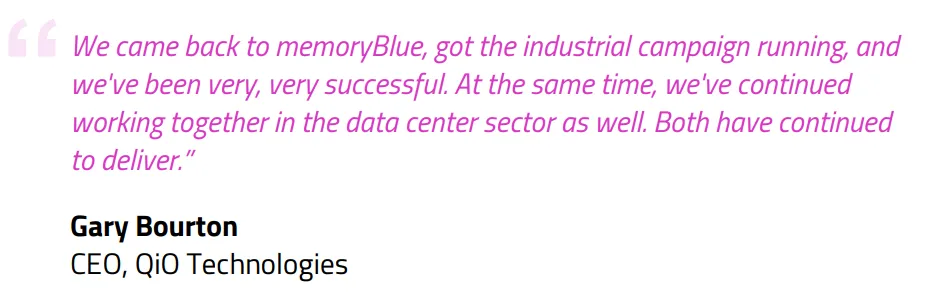
This time, memoryBlue took on a much bigger role. The program now also covers financial services, with campaigns in the UK, Europe, and the Middle East. Reps work alongside QiO’s team at industry events and on first calls with new customers.
memoryBlue now handles roughly 90% of QiO’s outbound business development and has generated more than $8 million in pipeline.
SalesRoads
One G2 user at a mid-sized insurance company appreciated how much effort SalesRoads put into a customized program:
“We had a lot of needs as a client, and SalesRoads did a great job customizing our work with them to meet our business needs. I know this required a lot of work on their end, and we are very thankful.”
Another G2 user, a company CEO, values SalesRoads’ willingness to turn down work outside its experience:
“They say no! Unlike other service companies that tend to say yes to all deals, SalesRoads really focuses on helping customers operate in verticals in which they have experience.”
memoryBlue vs SalesRoads: Which Outsourced SDR Partner is the Better Fit for Your Business?
SalesRoads and memoryBlue are both credible outsourced SDR partners. Your choice between them mostly depends on how much you want an outside team to take on.
SalesRoads is a good option for programs with one main market and goal. Experienced SDRs, published pricing, and no long-term contract keep the setup simple, and for US appointment setting, that’s often all a company needs.
memoryBlue makes more sense when you’re ready to enter multiple markets or need more support with complex technology sales.
Its international teams can manage outreach in new regions, and you can extend the partnership further into the sales cycle or eventually hire reps who already know your product and buyers.
If that’s where your program is headed, talk to memoryBlue about your goals and the engagement model that fits your team.
FAQs
How long should you run an outsourced SDR program before evaluating results?
Give the program time to get past its learning phase. In the first weeks, SDRs are still getting to know your product, and your messaging is being tested on real prospects. Early numbers often change once the team settles in, and a predictable pipeline takes longer to build.
Once reps are fully ramped, judge the program on qualified meetings and pipeline generation. Until then, meeting quality and prospect feedback tell you whether it’s heading in the right direction.
Is it better to hire an in-house SDR team or outsource sales development?
An in-house SDR team makes sense when you want full control and have managers who can recruit, train, and coach reps. But keep in mind that this control comes with ongoing costs like salaries and benefits.
Outsourced sales development suits companies that need pipeline sooner or don’t have that management capacity yet. A partner brings trained reps and managers, so programs launch faster and your team has less to run.
Check out the full cost breakdown in our blog post.
To compare costs for your own situation, try memoryBlue’s cost calculator.
Can outsourced SDRs work alongside an existing sales team?
Yes. Outsourced SDRs usually handle prospecting and qualification, which frees your AEs and internal reps to focus on moving deals forward.
That split works best when the outsourced team’s targets tie to your sales team’s quota, and both sides agree on what counts as qualified. With every call, email, and note logged in your CRM, your team can see the full history behind each meeting. A clear handoff covers the rest, from the details reps pass along to how quickly your AEs follow up.
What are some alternatives to memoryBlue and SalesRoads?
Several other providers offer outsourced SDR, BDR, and appointment-setting services. Three of the better-known options are:
- Belkins focuses on B2B appointment setting through cold email, LinkedIn, and cold calling, with clients ranging from manufacturers to consulting firms.
- CIENCE runs outbound SDR teams on month-to-month terms and also provides B2B contact data and lead generation.
- Callbox has offered multichannel, multilingual lead generation since 2004, with a focus on software, cybersecurity, and IT providers such as MSPs.
Before choosing one, compare which industries each provider knows best, how its teams operate, which regions it covers, and what contract length it requires.