



When sales stalls, it’s often for predictable reasons. Maybe your team is stretched thin. Hiring is taking a full quarter you don’t have. Or one stage of the funnel is holding everything else up.
In this case, sales outsourcing gives you extra capacity without building it in-house.
The catch is that “sales outsourcing” means at least five different things, and picking the wrong one can cost you six months.
That’s quite an expensive mistake, and that’s why we’re covering the best 11 sales outsourcing companies worth your time. We checked what each one is good at, where they fall short, and which kind of sales org they fit.
But first, let’s answer the question;
What is sales outsourcing?
Sales outsourcing means using an external team to handle part or all of your sales process. That can include prospecting, qualification, inside sales, pipeline management, closing deals, market expansion, or account growth.
Depending on what you need, some providers focus on one stage, while others can support several parts of the sales cycle under one engagement.
How We Evaluated These Companies
We evaluated each provider based on the following criteria:
- Sales-cycle coverage: Whether the provider focuses on prospecting or supports the broader sales process.
- Delivery model: How the provider structures its services and integrates with existing sales teams.
- Sales talent and management: The experience of its sales reps and the support they receive.
- Target market fit: How well the provider serves its clients’ specific markets.
- Sales infrastructure: How much of the sales operation the provider manages beyond supplying reps.
- Customer evidence: What independent reviews and published results reveal about service quality.
- Pricing and flexibility: The overall cost of engagement and the ability to adjust services as business needs change.
Note: memoryBlue is included in this guide, so we’ve used the same evaluation criteria for every provider.
11 Best Sales Outsourcing Companies on the Market Right Now
| Company | Best for | Sales coverage | What stands out | Pricing model |
| memoryBlue | Complex B2B technology sales | Prospecting through pipeline progression, closing support, and account management | Dedicated BDRs, SDRs, ISRs, and AEs; strong tech focus; 30+ languages; option to hire proven reps in-house | Custom fixed-fee, performance-based, or hybrid |
| SalesRoads | Phone-led B2B sales development | Prospecting, qualification, appointment setting, inbound qualification | Experienced dedicated SDRs with coaching, data, and strategy support | From $11,950 per four weeks for one dedicated SDR |
| Sales Focus | Dedicated US inside and field sales teams | Lead generation through closing and account management | US-based W-2 reps, field sales capability, market-entry support | From $3,950/month; higher tiers add commission |
| Belkins | Managed multichannel appointment setting | Research, prospecting, qualification, meeting booking | Strong manual research, coordinated email/LinkedIn/calling, dedicated SDR option | Average starting price around $5,000; larger programs custom |
| Callbox | Global and multilingual sales development | Prospecting, qualification, nurturing, ABM, appointment setting | 60+ country coverage, multilingual teams, strong multichannel infrastructure | Custom managed-service pricing; scope varies significantly |
| Martal Group | Fractional B2B sales teams with closing support | Prospecting through demos, negotiation, onboarding, and account management | Experienced fractional sellers, AI-supported outbound, broader sales-cycle coverage | Custom monthly subscription following an initial pilot |
| The Sales Factory | Onshore B2B sales team augmentation | Prospecting, qualification, full-cycle sales, and customer success | Dedicated onshore talent, CRM integration, market testing, internal training academy | Quote-based monthly packages by BDR headcount |
| CIENCE | AI-orchestrated outbound with flexible SDR capacity | Research, inbound/outbound qualification, nurturing, appointment setting | graph8 technology, flexible SDR geography/seniority, strong data and automation layer | Modular pricing: setup + platform + strategic team + SDR capacity |
| durhamlane | Complex, consultative B2B sales development | Prospecting, qualification, nurturing, account-based sales, expansion | Magic 35 qualification framework, consultative selling, outcome-linked model | Hybrid fixed fee + performance pricing; |
| demandDrive | Customized sales development with broader GTM support | Prospecting, qualification, pipeline support, inside sales, post-sale handoff | Custom programs plus RevOps, ABM, marketing, and GTM engineering | Custom engagements; outcome-based options available |
| MarketStar | Large-scale enterprise sales outsourcing | Pipeline generation through closing, technical sales, account management, and customer success | Enterprise-scale teams, global delivery, sales engineering, partner sales | Custom fully burdened pricing with performance-based options |
1. memoryBlue: Best for full-cycle B2B sales
memoryBlue is a B2B sales outsourcing company that helps you build and scale revenue teams without having to hire every sales role in-house.
This includes markets across SaaS, cybersecurity, AI & machine learning, fintech, health tech, managed service providers, digital transformation firms, and other companies selling complex, high-value solutions.
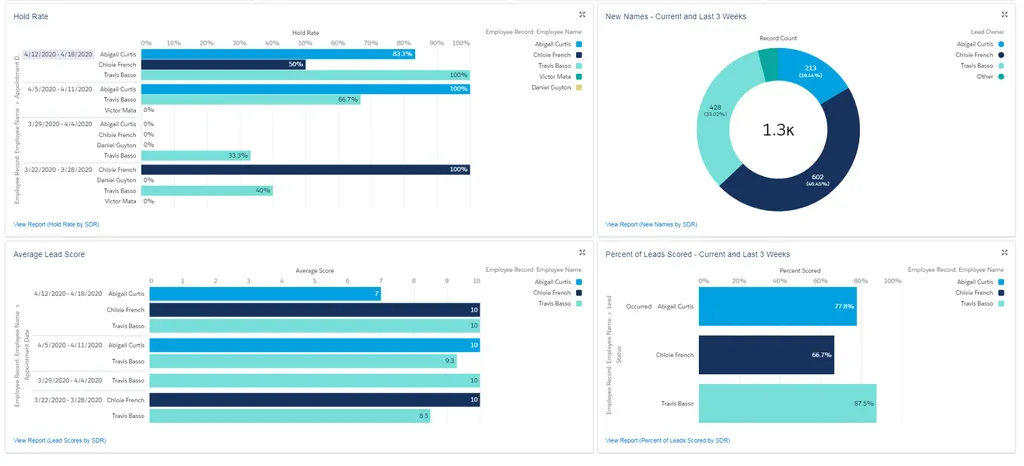
It can provide SDRs, ADRs, and AEs, so you can outsource one part of the sales process or build broader coverage across several stages.
That flexibility works well for different needs. You can use memoryBlue to build your sales pipeline, improve inbound qualification, add inside-sales capacity, enter new markets, or support opportunities further into the sales cycle.
The model is built around dedicated reps rather than transactional appointment setting. memoryBlue has roughly 650 sales professionals across nine offices, with managers and directors providing coaching and quality control.
It also supports outreach in 30+ languages across North America, EMEA, APAC, and LATAM.
Through Rising Stars, you can hire proven memoryBlue reps into your own team after they have already learned your product, market, and sales process.
Sales outsourcing model and capabilities
- Sales stages covered: Outbound prospecting, inbound qualification, pipeline progression, inside sales, closing support, account management, and customer support.
- Delivery model: Dedicated teams that can cover one sales function or multiple stages of the cycle.
- Team types: BDRs, SDRs, ISRs, and AEs, supported by delivery managers and directors.
- Global coverage: North America, EMEA, APAC, and LATAM, with outreach in 30+ languages.
- Client integration: Teams work inside the client’s CRM, workflows, messaging, and broader go-to-market process.
Advantages of working with memoryBlue
- Works closely with your internal sales team: Reps can plug into your existing processes, enablement, CRM, and day-to-day sales execution rather than operating as a separate lead source.
- “Catarina Hoch, who worked with us as a fractional CMO, brought a level of go-to-market expertise we couldn’t have hired for at our stage, and she adapted her approach to a genuinely technical buyer – engineers, digital transformation leads, CIOs and CTOs. The SDR we worked with performed well enough that we converted them to a full-time hire.” (Read full review)
- Coaching and management are built in: Delivery managers and directors handle daily coaching, performance support, and quality control, reducing the management load on your internal team.
- “I believe we got very lucky with the SDR and Delivery Manager (who manages our SDR on a day-to-day basis) that we were assigned at the onset of our campaign. Both have proven to be hardworking, coachable, and relentlessly enthusiastic, all of which is important in the world of inside sales.” (Read full review)
- It is designed for complex and technical sales: memoryBlue has spent more than 20 years working with B2B technology companies. Its reps are used to technical buyers, larger buying committees, and sales conversations that require more than basic qualification.
- “For sure the best part about Memory Blue, is it’s people. We were assigned a very curious and determined [], that constantly strived to get better and better at learning our product and in delivering a strong consistent message that spiked curiosity enough to consistently book meetings.” (Read full review)
| “memoryBlue got us in where our Inside team couldn’t“— Managing Director, South West Europe, Adobe Learn how memoryBlue delivered an 80% penetration rate with enterprise target accounts |
The results you get from working with memoryBlue
- APImetrics: APImetrics used memoryBlue as its outsourced sales team because it did not have the internal resources to build one. memoryBlue handled account research, inbound and outbound qualification, nurturing, webinars, meetings, and closing support. The engagement generated 51% of APImetrics’ pipeline, closed three significant deals, and contributed 72% of revenue in one quarter.
| “In a short space of time, memoryBlue got to grips with our IoT solution and adapted their approach to deliver sales engagements that converted into high-quality pipeline — in a complex and fast-moving market.” — David Langton, Global SVP Marketing, APImetrics [Read APImetrics Case Study] |
- Qualpay: Qualpay needed better-qualified outbound rather than more meetings. memoryBlue generated 21 qualified meetings in the first month, reached an average lead score of 9.3/10, and has since been credited with $244 million in pipeline and $115 million in closed revenue. By Q4 2024, memoryBlue had become Qualpay’s leading source of closed deals.
| “We knew the outsourced SDR model could work, but we initially picked a competitor mainly due to budget constraints. However, meetings booked weren’t truly qualified, wasting our sales team’s time. We needed a partner who understood our market and could consistently deliver quality leads.”— Elisabetta Cattaneo, VP of Marketing, Qualpay. [Read Qualpay case study ] |
- Gainsight: Gainsight used memoryBlue alongside an existing internal SDR team. Its North American program generated 530 meetings and more than $500,000 in closed-won revenue, before the partnership expanded into EMEA, where quota attainment reached 170%.
| “For me, it was never about leads or meetings — it was about tying SDR performance back to revenue. That’s what matters at the end of the day, and that’s how we evaluate the program.” — Craig Downing, VP Marketing, Gainsight [Read Gainsight case study] |
- Nexsan: Nexsan shows how the model can extend further down the sales funnel. The company used memoryBlue for inside-sales support with SDRs generating opportunities and closing reps working those opportunities further through the process.
| “[memoryBlue] understood how important it is to engage a person and put a personality behind the lead, and they understood sales strategy.”— Mike McDermot, Regional sales manager, Nexsan [Read Nexsan case study] |
Pricing
Pricing is quote-based and depends on the roles required, team size, geography, sales stages covered, and overall scope of the engagement.
Learn more → The Outsourced Sales Company 3,000+ B2B Companies Have Actually Bet Their Pipeline On
2. SalesRoads: Best for phone-led B2B sales development
SalesRoads is a US-based sales outsourcing company focused on the front end of the sales cycle.
It builds dedicated SDR programs for companies that need more outbound capacity, stronger qualification, and a steadier flow of sales-ready conversations.
The model is strongly phone-led. SDRs handle prospect research, cold calling, qualification, and appointment setting, with personalized email supporting the outreach.
Each program also includes sales coaching, strategy, optimization, and data support around the rep. Once a meeting is qualified and booked, the client’s AE typically takes over.
Sales outsourcing model and capabilities
- Sales stages covered: Prospect research, outbound prospecting, inbound qualification, B2B lead generation, appointment setting, and AE handoff. Closing usually stays with your team.
- Delivery model: Dedicated SDRs supported by a Client Strategist, SDR Performance Coach, Optimization Specialist, and Research & Data team.
- Channels and team types: Phone-led outreach supported by personalized email, plus dedicated inbound SDR teams for qualifying inbound demand.
- Scope: Best for appointment setting, lead generation, or run several motions across separate SDRs.
Pros
- You get a full support team around the SDR: Strategy, coaching, optimization, and data support all sit behind the rep, reducing the day-to-day management load on your team.
- Targeting and prospect data are included: SalesRoads builds lists around your ICP and verifies records across 14+ data sources. Current packages include 500 prospect records per SDR every four weeks.
- Campaigns improve over time: The team reviews performance and adjusts targeting, talk tracks, and cadence as it learns what works.
Cons
- The service stops before closing: SalesRoads focuses on prospecting, qualification, and appointment setting. Your sales team still owns discovery, negotiation, and closing.
- The starting cost is high: One dedicated SDR currently costs $11,950 per four weeks, which may be difficult to justify for low-ACV products or smaller markets.
- The phone-first model will not fit every sales motion: Teams built around product-led growth or low-touch sales may not need this level of calling support.
What customers say about SalesRoads
- “They use an older, less modern CRM (VanillaSoft) which created a lot of extra work with regard to passing data back and forth.” (Read full review)
- “Speed to market, quality of the process, and people. David the CEO, personally stayed engaged during the project.” (Read full review)
Pricing
One dedicated SDR plus the full support team starts at $11,950 per four-week engagement, two SDRs cost $16,750, and three cost $23,500.
3. Sales Focus: Best for dedicated US inside and field sales teams
Sales Focus takes a broader sales outsourcing approach than most companies on this list.
It recruits, trains, and manages dedicated inside or field sales teams that can handle prospecting, qualification, closing, and, on larger programs, account management.
That makes it a good fit when you need actual sales capacity, and not just more leads.
Sales Focus works across technology, healthcare, energy, manufacturing, telecom, and consumer products.
Its LaunchUSA program also helps international companies build a US sales presence without setting up the team themselves.
Sales outsourcing model and capabilities
- Sales stages covered: Lead generation, prospecting, qualification, closing, and account management.
- Delivery model: Dedicated inside or field sales teams recruited, trained, and managed by Sales Focus.
- Channels and team types: SDRs, inside sales reps, field salespeople, cold calling, email, social outreach, events, and face-to-face selling.
- Scope: Best for lead generation alone or extend the program through closing and post-sale account management.
Pros
- Supports inside and field sales: Teams can use phone and email-based reps, field sellers, event support, and face-to-face sales when the motion requires it.
- Sales Focus employs and manages the reps: The company handles recruiting, training, HR, benefits, performance management, and replacement.
- Uses a structured launch process: Its S.O.L.D. methodology covers knowledge transfer, recruiting, training, launch, and ongoing management.
Cons
- Broader programs require a longer commitment: Starter packages begin with a three-month pilot, while Standard and Premium require four months before moving month to month.
- The model can be heavier than necessary: Teams that already have strong AEs, tooling, and sales management may not need a fully managed sales operation just to add top-of-funnel capacity.
- Launch period takes 30-45 days: Building and ramping a dedicated sales team takes time, which may be too slow for companies that need immediate sales capacity.
What customers say about Sales Focus
- “They are real go-getters, and they seem to really use their skills!” (Read full review)
Pricing
- Starter costs $3,950/month with a three-month pilot
- Standard costs $5,950/month plus commission and adds closing
- Premium costs $6,750/month plus commission and extends into account management
4. Belkins: Best for managed multichannel appointment setting
Belkins focuses more on prospecting, qualification, and appointment setting. It can manage the early sales motion from target-market definition and account research through cold outreach, qualification, and meeting booking.
Belkins offers two main delivery models. Its appointment-setting service uses its existing delivery team, while the outsourced SDR service recruits and trains a dedicated rep for your program.
Both can combine email, LinkedIn, cold calling, research, copywriting, qualification, reporting, and no-show recovery.
Sales outsourcing model and capabilities
- Sales stages covered: ICP and TAM development, prospect research, outbound prospecting, qualification, appointment setting, follow-up, and no-show recovery.
- Delivery model: Managed appointment-setting teams or dedicated SDRs recruited and trained around your sales motion.
- Channels and team types: Email, LinkedIn, cold calling, and other channels, supported by SDRs, account managers, researchers, copywriters, and deliverability specialists.
- Scope: Primarily top-of-funnel and sales-development work. Closing generally remains with your internal sales team.
Pros
- Research is hands-on: Prospects are manually checked against agreed criteria before outreach, which helps when the market is narrow or account quality matters.
- You can move into a dedicated SDR model: Once the motion is proven, Belkins can recruit and train a dedicated rep around your market and sales process.
- Tools and deliverability support are included: Current packages include tools such as Folderly and Frostbite, along with ongoing email deliverability support.
Cons
- The service is still mainly top of funnel: Belkins focuses on research, outreach, qualification, and appointment generation. Your team usually owns proposals, negotiation, and closing.
- Dedicated SDR programs require a bigger commitment: Recruiting and training a dedicated rep takes more planning than a lighter appointment-setting engagement.
- Campaign results can vary: Performance depends on the market, targeting, offer, and how quickly the team adjusts when early results are weak.
What customers say about Belkins
- “They have been pivotal in expanding our client base across the US and Western Europe, particularly within the advertising and ad tech sectors.” (Read full review)
- “Their LinkedIn messaging included responses that used the prospects’ wrong name repeatedly leading to harsh responses and reputational damage.” (Read full review)
Pricing
Starts from $5,000, with outsourced SDR programs including up to 1,500 leads per month, three outreach channels, and 100+ annual sales meetings.
Learn more → memoryBlue vs. Belkins: Which Outsourced SDR Partner Is Right for You?
5. Callbox: Best for global and multilingual sales development
Callbox is a global B2B sales outsourcing company for prospecting, qualification, and pipeline generation.
It works well for mid-market and enterprise teams selling across multiple regions, languages, or time zones.
Callbox programs combine dedicated SDRs with account research, AI-enriched data, campaign management, and outreach across phone, email, LinkedIn, and other digital channels.
Plus, it operates across 60+ countries in North America, EMEA, APAC, and LATAM, making it a strong fit for international sales development.
Sales outsourcing model and capabilities
- Sales stages covered: Account research, ABM, nurturing, event promotion, and qualified-opportunity handoff.
- Delivery model: Managed campaign pods with SDRs, campaign management, prospect data, reporting, and supporting technology.
- Channels and team types: Phone, email, LinkedIn, social, ABM, and event campaigns supported by human teams and the Smart Engage platform.
- Scope: You can outsource core SDR work or add services such as ABM, market expansion, lead nurturing, event marketing, and data support.
Pros
- Campaign Pods add more support around the SDR: Programs can include campaign management, research, email, social, QA, and SDR execution.
- Multichannel outreach is built in: Callbox coordinates phone, email, LinkedIn, and digital touches through the same campaign.
- Well suited to market expansion: Regional data, localized outreach, and cross-border sales development make Callbox useful for entering new territories.
Cons
- Performance can vary by market: International campaigns may need more localization around messaging, targeting, and regional buying behavior.
- Reporting can lack deeper analysis: Teams that want more strategic insight beyond campaign metrics may need additional reporting or analysis.
- The model can be heavier than necessary: Companies that already have strong data, tooling, and campaign management may not need the full Campaign Pod structure.
What customers say about Callbox
- “We’ve consistently had meetings every week, and they’re ramping up in both quantity and quality.” (Read full review)
- “Improving their effectiveness in certain markets where English is not so well spoken. There were clear performance differences with e.g. Vietnam compared to Indonesia, Philippines and Malaysia.” (Read full review)
Pricing
Ranges from $15,000-$30,000 per month for one pod. And that comes with one dedicated SDR, multichannel outreach, AI-enriched data, campaign management, and reporting.
6. Martal Group: Best for fractional B2B sales teams with closing support
Martal Group provides fractional sales teams for technology companies and other complex B2B businesses.
Its service can extend beyond prospecting and appointment setting. Depending on the tier, Martal can support discovery, demos, deal progression, negotiation, onboarding, and account management.
The model combines onshore Sales Executives with research and sales operations support. Martal’s AI platform also helps with prospect data, intent signals, sequencing, calling, LinkedIn outreach, and campaign optimization.
Teams are matched partly by market and industry experience, with coverage across North America, Europe, and Latin America.
Sales outsourcing model and capabilities
- Sales stages covered: Prospecting, lead generation, qualification, appointment setting, discovery, demos, deal progression, negotiation, onboarding, and account management.
- Delivery model: Fractional, onshore Sales Executives supported by research and sales operations.
- Channels and team types: Email, cold calling, and LinkedIn outreach supported by Martal’s AI platform.
- Scope: Tier 1 focuses on lead generation, Tier 2 adds sales and onboarding, and Tier 3 extends into account management.
Pros
- Covers more of the sales cycle: Martal can extend from prospecting and qualification into discovery, negotiation, onboarding, and account management.
- Experienced sales talent: Sales Executives typically bring 3+ years of B2B sales experience, making the model better suited to more complex conversations.
- AI supports the full outbound motion: Martal combines prospect data, enrichment, intent signals, email, LinkedIn, dialing, and analytics in one system.
Cons
- The model can be broader than necessary: Teams that only need extra calling capacity may not need the added strategy, data, technology, and operations support.
- ICP calibration can take time: Narrow or specialized markets require a few rounds of targeting and messaging adjustments before lead quality becomes consistent.
- Full-cycle programs add commercial complexity: Martal combines a monthly fee with sales commission, and standard engagements begin with a four-month pilot before moving to a monthly subscription.
What customers say about Martal Group
- “The most impressive part of working with Martal was their ability to get up to speed on our value proposition and market quickly.” (Read full review)
- “I feel that the sales leads could be better qualified. This aspect of Martal Group’s services needs improvement to enhance the effectiveness of our sales strategy.” (Read full review)
Pricing
Starts with a three-month pilot campaign, followed by a monthly subscription, with pricing customized around the sales team, target volume, and scope of work.
Learn more → memoryBlue vs. Martal Group: Which Outsourced SDR Partner Is Right for You?
7. The Sales Factory: Best for onshore B2B sales team augmentation
The Sales Factory helps B2B companies build a sales function from scratch or add capacity to an existing team.
The model uses dedicated onshore reps supported by account management, sales enablement, data, and technology.
Reps work inside your CRM and sales process, so the engagement feels more like adding sales capacity than handing off leads from a separate agency.
Sales outsourcing model and capabilities
- Sales stages covered: Market research, GTM planning, prospecting, qualification, inbound and outbound sales, business development, full-cycle selling, onboarding, renewals, and upsells.
- Delivery model: Dedicated onshore BDR and sales teams supported by account management, sales enablement, data, and campaign strategy.
- Channels and team types: BDRs and inside sales teams using phone, email, social outreach, and inbound sales.
- Scope: You can use The Sales Factory to test a new market, launch outbound, expand into a new region, or support more of the sales cycle as your needs grow.
Pros
- Supports market testing: The team can help define the ICP, test messaging, validate new segments, and use early results to guide expansion.
- Develops sales talent internally: Its Sales Prospecting Academy provides a structured path for training and developing SDR talent.
- Works inside your CRM: Campaign activity, prospect history, and qualification data can stay in your existing sales environment.
Cons
- Onshore delivery comes at a higher cost: Teams focused mainly on low-cost SDR capacity may find offshore providers more economical.
- The service is built around relatively active outbound: Some programs run at high call and email volumes, which may not suit small TAMs or highly targeted ABM motions.
- Not a fit for everyone: The service includes reps, enablement, messaging, technology, management, and reporting. Teams that already have that infrastructure and only need extra SDR capacity may not need the full package.
What customers say about The Sales Factory
- “It’s been a little more difficult than expected to compel TSF to show results, particularly natively in our systems.” (Read full review)
- “The team is strong in communicating and is very responsive” (Read full review)
Pricing
Exact monthly fees are available by quote.
8. CIENCE: Best for AI-orchestrated outbound with flexible SDR capacity
CIENCE combines outsourced sales development with graph8, its AI-powered GTM platform.
It unified prospect data, intent signals, outbound campaigns, inbound follow-up, calling, email, LinkedIn, automation, and performance tracking into one system.
CIENCE can also add SDR capacity based on your market, geography, and campaign needs. graph8 handles much of the data and orchestration, while human SDRs and operators manage conversations, qualification, and execution.
Sales outsourcing model and capabilities
- Sales stages covered: Account research, targeting, outbound prospecting, inbound response, qualification, nurturing, appointment setting, and sales-ready handoff. Closing stays with your team.
- Delivery model: Managed GTM execution with flexible SDR capacity supported by CIENCE and graph8.
- Channels and team types: SDRs, GTM engineers, and data specialists working across phone, email, LinkedIn, ads, direct mail, and inbound follow-up.
- Scope: You can use CIENCE for outbound sales development, inbound qualification, telemarketing, or a broader GTM program combining data, automation, campaign infrastructure, and SDR execution.
Pros
- AI handles more of the operational work: graph8 supports enrichment, routing, scheduling, and execution timing, while human SDRs handle qualification and live buyer conversations.
- SDR capacity is flexible: Companies can choose offshore, European, or US-based reps at different experience levels and adjust capacity as needs change.
- The GTM infrastructure comes first: Programs begin with targeting, data, campaign setup, and workflow design before SDR activity scales.
Cons
- The commercial model has several moving parts: Setup, graph8, strategic support, SDR capacity, onboarding, and potential performance fees can make the total cost harder to compare with a simple SDR retainer.
- Independent feedback is mixed: CIENCE currently holds 3.8/5 across 188 G2 reviews and 4.2/5 across 142 Clutch reviews, with campaign results varying across engagements.
- The focus remains mainly on pipeline creation: CIENCE supports targeting, outreach, qualification, and sales handoff. Demos, negotiation, closing, and account ownership generally stay with your team.
What customers say about CIENCE
- “Despite 6 months of interactions and repeated assurances, they did generate a single new lead for our business. Their call center reps are all located offshore and have little to no sales experience.” (Read full review)
- “Sales was articulate in helping prescribe a solution. We sought them out for a different solution that would have cost us more and made them more money.” (Read full review)
Pricing
CIENCE currently prices its core GTM system at $5,000 one time for setup, $2,000 per month for the strategic team, and $499 per month for graph8, for a first-month total of $7,499 before SDR capacity.
9. durhamlane: Best for complex, consultative B2B sales development
durhamlane focuses on complex B2B sales where the first conversation needs more than basic qualification.
It works across manufacturing, healthcare, financial services, technology, and industrial markets, with dedicated SDR teams supporting programs across the UK, Europe, and North America.
Its approach is built around the Selling at a Higher Level methodology and Magic 35 qualification framework. The focus is on sales-accepted opportunities, pipeline, and revenue.
Sales outsourcing model and capabilities
- Sales stages covered: Outbound prospecting, inbound conversion, nurturing, qualification, account-based sales development, retention, expansion, and sales-ready handoff.
- Delivery model: Dedicated SDR teams supported by delivery management, sales enablement, data, technology, and reporting.
- Channels and team types: Phone, email, account-based outreach, inbound follow-up, event support, and multichannel nurturing.
- Scope: You can use durhamlane for net-new pipeline, MQL-to-SQL conversion, strategic accounts, international expansion, retention, or upsell programs.
Pros
- Uses a structured qualification process: Its Magic 35 framework applies seven criteria before an opportunity moves to the client’s sales team.
- SDRs work under your brand: durhamlane white-labels its teams so prospects experience them as part of your organization.
- Supports international expansion: Native-language SDRs can run programs across the UK, Europe, and North America.
Cons
- Your team still has to close: durhamlane focuses on creating, qualifying, and progressing opportunities rather than owning the full sales cycle.
- The model needs time to prove out: Onboarding takes roughly 30 days, and durhamlane recommends allowing around six months to properly validate the motion.
- It may be too involved for simple sales motions: Companies selling transactional offers may not need the added research, qualification, enablement, and account-planning layer.
What customers say about durhamlane
- “The quality of the leads, combined with how easy they are to work with. Communication is responsive and the account management is great.” (Read full review)
- “Lack of visibility on outreach activity i.e., understanding who has been contacted without creating additional workload.” (Read full review)
Pricing
durhamlane uses a hybrid performance-based model. It combines a fixed monthly fee with variable fees tied to agreed outcomes such as sales-accepted meetings or revenue.
10. demandDrive: Best for customized sales development with integrated GTM support
demandDrive builds tailored B2B sales-development programs around each client’s sales motion.
Its core services cover outbound prospecting, inbound qualification, appointment setting, and inside-sales support. Programs also include sales management, data, technology, and GTM strategy.
It also offers growth marketing, ABM, RevOps, CRM and automation work, and GTM engineering.
Sales outsourcing model and capabilities
- Sales stages covered: Outbound prospecting, inbound qualification, appointment setting, opportunity qualification, pipeline support, quote and RFP support, and post-sale handoff.
- Delivery model: Custom SDR and BDR programs, outcome-based appointment setting, and inside-sales support with client-success and senior strategic oversight.
- Channels and team types: SDRs and BDRs working across phone, email, and other channels, supported by data, automation, client success, and GTM technology.
- Scope: You can outsource a specific sales-development function or combine sales outsourcing with ABM, marketing, RevOps, and GTM engineering.
Pros
- Programs are tailored to the sales problem: demandDrive builds the engagement around your market, buyers, growth stage, and revenue goals rather than forcing every client into the same package.
- Support can continue after the meeting: Inside-sales teams can help with qualification, follow-up, pipeline management, quotes, purchase orders, RFPs, and post-sale handoff.
- Different commercial models fit different motions: Companies can use dedicated SDR and BDR programs or outcome-based models tied to sales-ready meetings.
Cons
- There is no simple sticker price: Programs are scoped around the work involved, so you need a proposal before you can compare the economics properly.
- Its breadth can complicate a simple buying decision: If all you need is meeting generation, the extra marketing, RevOps, automation, and GTM capability may add little value.
- Niche markets can make rep matching harder: Highly specialized products may require more time to find an SDR with the right background and credibility.
What customers say about demandDrive
- “I really appreciate demandDrive’s comprehensive service that goes beyond merely generating leads to developing them into qualified leads with RFQs ready for us.” (Read full review)
- “DemandDrive needs to develop a team that better understands marketing and the sales process from a manufacturer’s position.” (Read full review)
Pricing
demandDrive uses outcome-based pricing where the client defines what qualifies as a sales-ready result and pays against those outcomes.
11. MarketStar: Best for large-scale enterprise sales outsourcing
MarketStar is built for companies that need more than a small outsourced SDR team.
There’s the Sales as a Service® model that can cover pipeline generation, new-business sales, partner sales, sales engineering, account management, customer success, and RevOps.
Companies can outsource one part of the revenue engine or connect several stages under the same provider.
MarketStar also has a strong presence in technology markets, including SaaS, cloud, cybersecurity, telecom, and AdTech.
Teams can include BDRs, SDRs, AEs, sales engineers, account managers, and customer-success reps across North America, EMEA, APAC, ANZ, and Latin America.
Sales outsourcing model and capabilities
- Sales stages covered: Demand generation, prospecting, qualification, pipeline development, closing, technical sales, account management, retention, upsell, and customer success.
- Delivery model: Dedicated, full-time sales teams through MarketStar’s Sales as a Service® model.
- Channel/Team types: BDRs, SDRs, AEs, sales engineers, account managers, customer-success teams, partner-sales specialists, and RevOps support.
- Scope: You can outsource a single revenue function or build a broader program across acquisition, partner sales, customer growth, and revenue operations.
Pros
- Covers the full revenue lifecycle: MarketStar can support pipeline generation, BDR and AE execution, technical sales, account management, retention, and expansion.
- Built for larger sales organizations: Dedicated teams typically start at five to eight people including management and can scale to more than 100 reps.
- Global delivery is already part of the model: Teams can operate across North America, EMEA, APAC, ANZ, and Latin America with multilingual coverage.
Cons
- The minimum team size rules out smaller tests: Starting with five to eight people makes little sense for companies that only need one SDR or a small appointment-setting pilot.
- Launching the program takes longer: MarketStar targets roughly eight weeks for setup, depending on hiring, integrations, training, and program complexity.
- You need discovery before you can understand the cost: Pricing changes with team size, role seniority, geography, technology, and the complexity of the sales motion.
What customers say about MarketStar
- “The team excelled with on-time delivery, a focus on the client’s needs, and availability. Their service customization stood out.” (Read full review)
- “It took some time for the team to get familiar with the industry and required a lot of involvement on our side and clarifying the general aspects over and over again.” (Read full review)
Pricing
MarketStar uses custom value-metric pricing. Quotes factor in rep seniority, team size, geography, manager-to-rep ratio, technology, launch complexity, benefits, training, recruiting, and other operating costs.
What Sales Processes Can You Outsource?
Sales outsourcing can cover much more than lead generation. Depending on the provider, you can hand over a single stage or several parts of the sales cycle.
| Sales stage | What you can outsource |
| Prospecting | Account research, list building, cold calling, cold email, LinkedIn outreach |
| Lead qualification | Inbound response, discovery, qualification, lead scoring |
| Sales development | Appointment setting, SDR/BDR programs, outbound follow-up |
| Pipeline progression | Lead nurturing, follow-up, opportunity qualification, re-engagement |
| Closing | Demos, proposals, negotiation support, AE or full-cycle sales support |
| Post-sale | Customer handoffs, onboarding, account management, expansion, customer success |
You do not have to outsource the entire sales function. In many cases, it’s better to start with the stage creating the bottleneck and expand from there if the model works.
When Should You Outsource Your Sales Process?
Sales outsourcing tends to work best when there is a clear constraint in the sales process.
Sometimes that is headcount. Other times, it is speed, specialist expertise, or a part of the sales funnel the internal team cannot cover effectively.
Hiring cannot keep up with growth
Building an internal sales team takes time. Roles need to be approved, candidates sourced, reps hired, trained, and then ramped before they contribute consistently.
Outsourcing can bridge that gap when pipeline targets or market opportunities cannot wait for another full hiring cycle. It can also provide temporary capacity while permanent roles are being filled.
A new market needs to be tested first
Entering a new geography, industry, or buyer segment usually means learning new messaging, objections, buying behavior, and sometimes language or regulatory requirements.
An outsourced team can test that market before the company commits to local hires or a larger expansion. The early campaign data can show whether the opportunity is strong enough to justify further investment.
One part of the funnel is holding everything else back
The problem is not always a lack of salespeople. There may be plenty of demand but not enough people qualifying it.
SDRs may be generating opportunities faster than they can be followed up. Or AEs may be carrying too much prospecting and nurturing work.
In those cases, outsourcing the constrained stage can increase capacity without changing the rest of the sales organization.
Turnover keeps disrupting pipeline
SDR and sales turnover can create gaps that take months to recover from once recruiting and ramp time are included.
A managed outsourced team can provide continuity while an internal team is rebuilt, or take ownership of a function where repeated hiring and replacement have become difficult to sustain.
The sales motion requires expertise the team does not have
Some markets need specific capabilities, such as public-sector selling, technical discovery, multilingual outreach, field sales, or experience reaching enterprise buyers.
Hiring permanently for every specialist need is not always practical. Sales outsourcing provides access to those skills for a particular market, campaign, or stage of growth.
AEs are spending too much time away from closing
Experienced AEs are expensive people to have researching accounts, chasing unresponsive prospects, qualifying early interest, or managing repetitive follow-up.
When those tasks start taking meaningful time away from discovery, deal progression, and negotiation, moving earlier-stage work to an outsourced team can give the existing sales organization more room to close.
Sales Outsourcing Models and Pricing
Sales outsourcing can be structured in a few different ways. It all depends on how much of the sales process needs support and how closely the external team should work with the internal one.
| Model | How it works | Best fit |
| Dedicated outsourced sales team | A provider assigns dedicated reps to the business and manages their hiring, training, coaching, and performance. | Companies that need consistent sales capacity without building the team internally. |
| Fractional or supplemental team | External reps add capacity alongside an existing sales team rather than replacing it. | Teams covering staffing gaps, seasonal demand, new territories, or temporary capacity needs. |
| Function-specific outsourcing | One part of the sales process is handed over, such as prospecting, inbound qualification, appointment setting, or account management. | Companies with a clear bottleneck in one stage of the funnel. |
| Full-cycle sales outsourcing | The provider takes responsibility for several stages, potentially from prospecting through qualification, closing, and post-sale support. | Businesses that need a broader external sales function rather than help with one stage. |
| Project or market-entry engagement | A sales team is deployed for a defined objective, such as entering a new country, launching a product, or testing a new vertical. | Companies that want to validate a market before committing to permanent headcount. |
What to Look for in a Sales Outsourcing Partner
A good sales outsourcing partner should fit the way your business already sells. Before signing, work through a few practical checks:
- Can they cover the right part of the sales cycle? Be clear on where their responsibility starts and stops. Some providers are built for prospecting and qualification, while others can support opportunity progression, closing, customer success, or account growth.
- Do they understand the market and buyer? Look for experience with similar industries, deal sizes, buyer personas, sales cycles, and regions. Selling a technical enterprise product requires a very different motion from high-volume SMB sales.
- Who will represent the brand? Check the experience of the reps assigned to the account, whether they are dedicated or shared, where they are based, and how they are trained before speaking to prospects.
- What management and coaching sits around the reps? Strong providers do not leave performance to the individual salesperson. There should be clear ownership for coaching, call reviews, quality control, and fixing problems when a rep or campaign is underperforming.
- Can they work inside your existing sales stack? CRM integration matters. Prospect activity, qualification notes, call recordings, opportunities, and handoffs should flow into systems such as Salesforce or HubSpot without creating another disconnected process.
- Does the reporting show business outcomes? Calls made and emails sent are useful operational metrics, but the reporting should also show held meetings, accepted opportunities, pipeline progression, and what is actually converting.
- Who owns the data, messaging, and playbooks? Clarify ownership before the engagement starts. Prospect lists, scripts, sequences, CRM records, campaign learnings, and playbooks should not suddenly become inaccessible if the relationship ends.
- Is the pricing clear once everything is included? Compare more than the public retainer. Check whether prospect data, technology, management, commissions, onboarding, reporting, and setup fees are included, along with any minimum commitment.
- Can the model scale with the business? A useful partner should be able to add reps, regions, languages, or sales functions without requiring the entire program to be rebuilt. It should also be possible to reduce scope if priorities change.
- Is there proof from companies that look similar to yours? Look for case studies, customer reviews, and measurable results from companies with similar products, buyers, or sales cycles.
Outsource the Sales Work That’s Slowing Your Growth
The point of sales outsourcing is not to replace a good internal team. It is to remove the work that is keeping that team from performing at its best.
That might mean adding prospecting capacity, tightening qualification, keeping opportunities moving, or giving AEs more time to focus on the deals that actually need them.
And in some cases, it means connecting several of those stages under one partner instead of managing separate vendors for each.
We’ve built memoryBlue as the sales outsourcing partner specifically for this. Our teams can plug into a specific part of your sales process or support a broader motion with dedicated BDRs, SDRs, ISRs, and AEs across pipeline creation, progression, closing support, and account management.
Build the right sales team with memoryBlue →
FAQs
What are sales outsourcing services?
Sales outsourcing services give a company external sales capacity without requiring it to hire and manage every role internally.
Depending on the provider, that can include prospecting, qualification, appointment setting, pipeline management, closing support, account management, or a combination of several functions.
How is sales outsourcing different from lead generation services?
Lead generation services usually focus on creating interest and identifying potential buyers.
Sales outsourcing can go further by qualifying prospects, running discovery calls, progressing opportunities, supporting AEs, and in some cases managing closing or post-sale activity.
Can an outsourced sales team support the full customer acquisition process?
Yes, although it depends on the provider. Some firms only handle the top of the funnel, while broader sales outsourcing solutions can support the entire customer acquisition process.
Can sales outsourcing support account-based marketing (ABM)?
Yes. Some providers can work alongside an ABM program by researching target accounts, identifying relevant contacts, running coordinated outreach, and following up on buying signals.
The sales team then turns that account-level interest into conversations and opportunities.
Do sales outsourcing providers use intent data?
Some do. Intent data can help identify accounts showing signs of active interest and give sales development representatives another signal for prioritizing outreach.
It is most useful when combined with strong ICP criteria and human qualification. Intent alone does not guarantee that an account is ready to buy.
What KPIs should you track with a sales outsourcing partner?
The right KPIs depend on the job the provider is responsible for.
- For an SDR program, that might include qualified meetings, show rates, sales-accepted opportunities, and pipeline created.
- For broader engagements, revenue, conversion rates, deal progression, retention, or expansion may matter more than raw activity such as calls and emails.
Can sales and marketing be outsourced together?
Yes. Some providers offer outsourced sales and marketing under one engagement, combining services such as demand generation, ABM, outbound sales, RevOps, and lead qualification.